Stairwells and Balconies: Why Some Work and Some Do Not | Shared Space
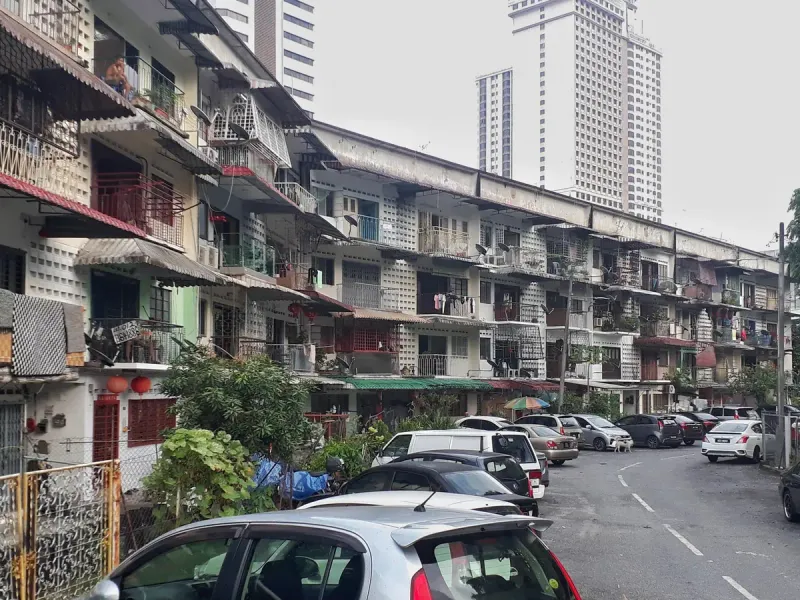 Photos by Adeline Chua
 The Shared Space series explores the many burdens and joys that building design brings to people sharing their living spaces with others. This first post features two low rise flats along Jalan Union in Sentul, Kuala Lumpur - Hock Lock Mansions (pictured, top) and Sentul Mansions (bottom).
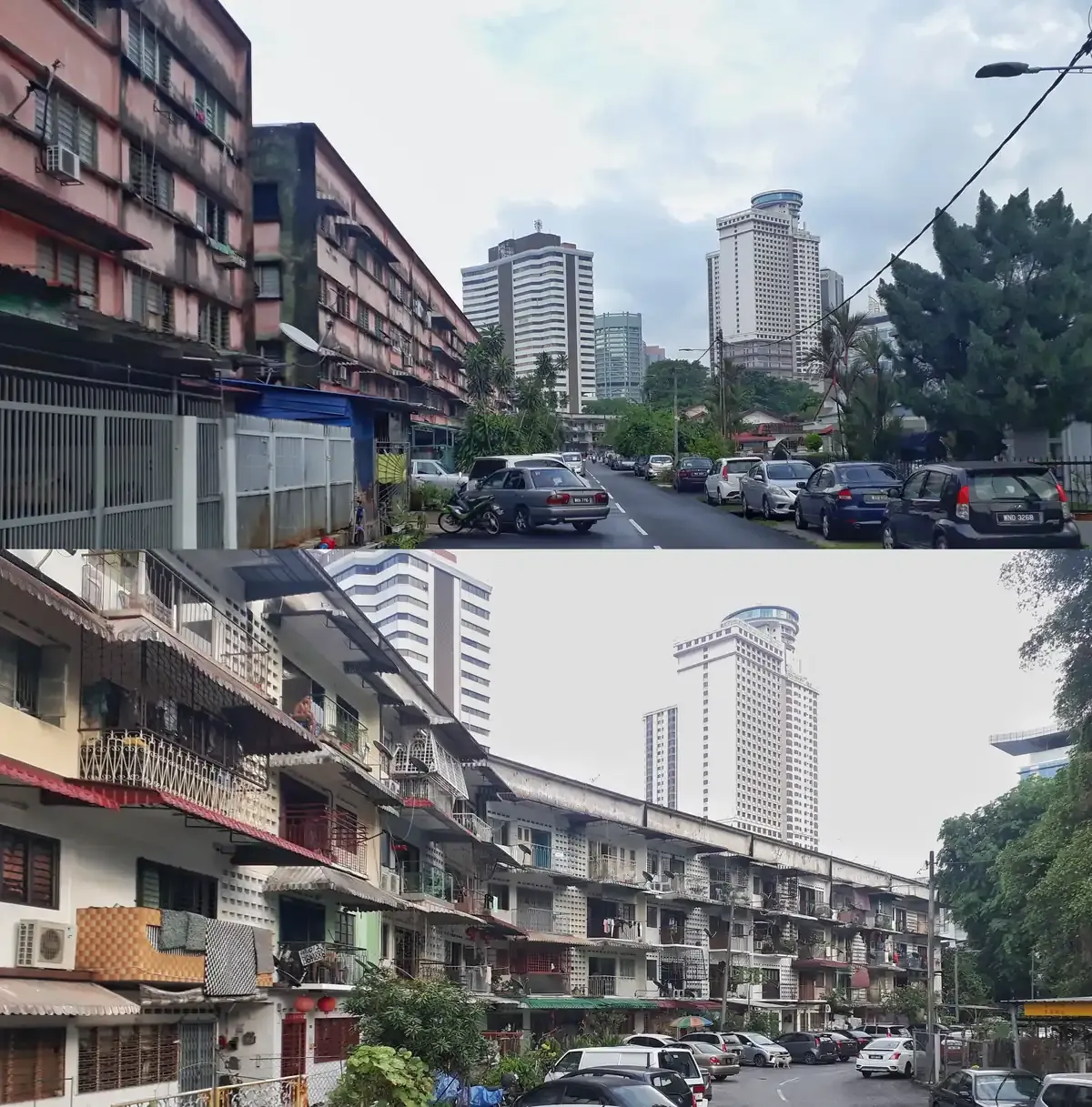
The two flats have many similarities but feel distinctly different, energetically. Each development consists of two blocks of flats that follow a near identical plan: four-storey blocks with the ground level unit having its front door and porch facing the street.
It seems that both flats are occupied mostly by Chinese and Indian families. Although these flats are what we would consider low cost housing, it is interesting to note that the vehicles parked outside Sentul Mansions indicate middle class earners. Families there have most likely increased their income levels significantly but chose to remain living in the same neighbourhood instead of ‘moving on up’.
From a placemaking point of view, what sets Hock Lock Mansions and Sentul Mansions apart are their placement of stairwells and their use of balconies.
Hock Lock Mansions’ stairwells are placed at the extreme ends of the blocks while Sentul Mansions’ stairwells are interspersed across the block in between every two units. There are no balconies at Hock Lock Mansions, unlike Sentul Mansions, which has two types of balconies.
The use (or lack) of stairwells and balconies in these two flats showcase a key measure in responsive design - permeability. A space that is permeable is one that offers access to its users and gives them choices; different routes from place to place or the option to retreat from public to private and vice versa.
We’ll discuss these in detail as we take a closer look at the two developments.
Hock Lock Mansions
Hock Lock Mansions’ washed-out pink paint is streaked with patches of black moss. From the street, one sees that each unit has 3 panes of louvred windows, and some owners have added awnings and grills for extra space to dry laundry. Although this is a practical move, it comes at the expense of blocking natural light from entering the interior.
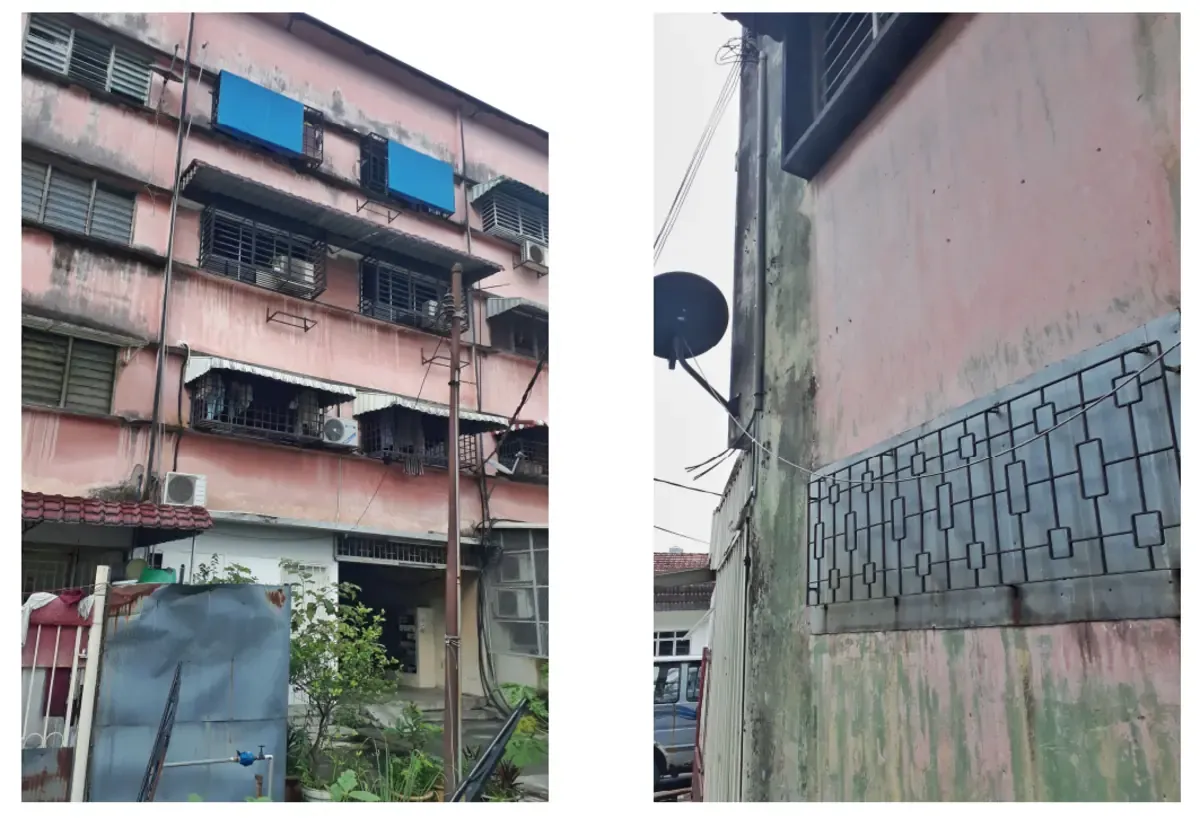
Even on sunny afternoons, one is met with dimness upon stepping into the building’s entryway. This lack of light is caused by the uninterrupted stretch of units being built side-by-side (see below), with hardly any break in between to allow sunlight from outside into the central walkway within the block.
The only break comes in the form of three ventilated stairwells; two on both ends of the block and one built in the middle.
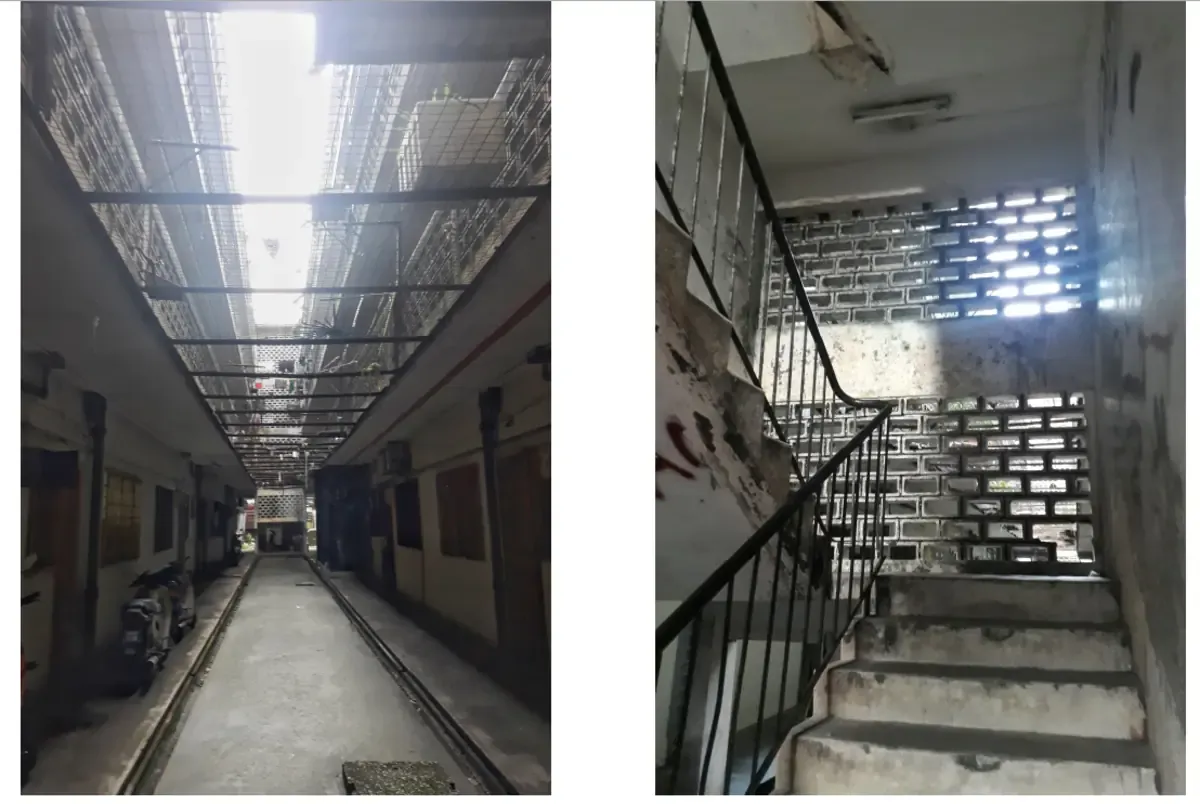
The stairwells, fortunately, are a good example of permeability. Instead of dark and poorly ventilated ones, Hock Lock’s are constructed with hollow concrete blocks, not only allowing air flow and natural sunlight in, but also serving the purpose of discouraging unwanted activities by providing no cover for them. It is a shame that this permeability is not applied to more parts of the building’s design.
Just a few metres down the road are the Sentul Mansions, which provide us with a direct comparison of what (just slightly) more permeable architecture can do to positively impact a place.
Sentul Mansions
Sentul Mansions immediately give off the impression of a livelier community. There might be many reasons for this, but permeability is definitely one element that has helped to energise the place.
Unlike Hock Lock’s, Sentul Mansions’ design allocates more stairwells per block: at least one between every two to four units.These ventilated stairwells not only allow more light and air to flow through, but also give users a variety of routes they can take on their way in and out of the building. This will, in theory, increase the circulation and interaction between the users.
The second difference is the existence of balconies.
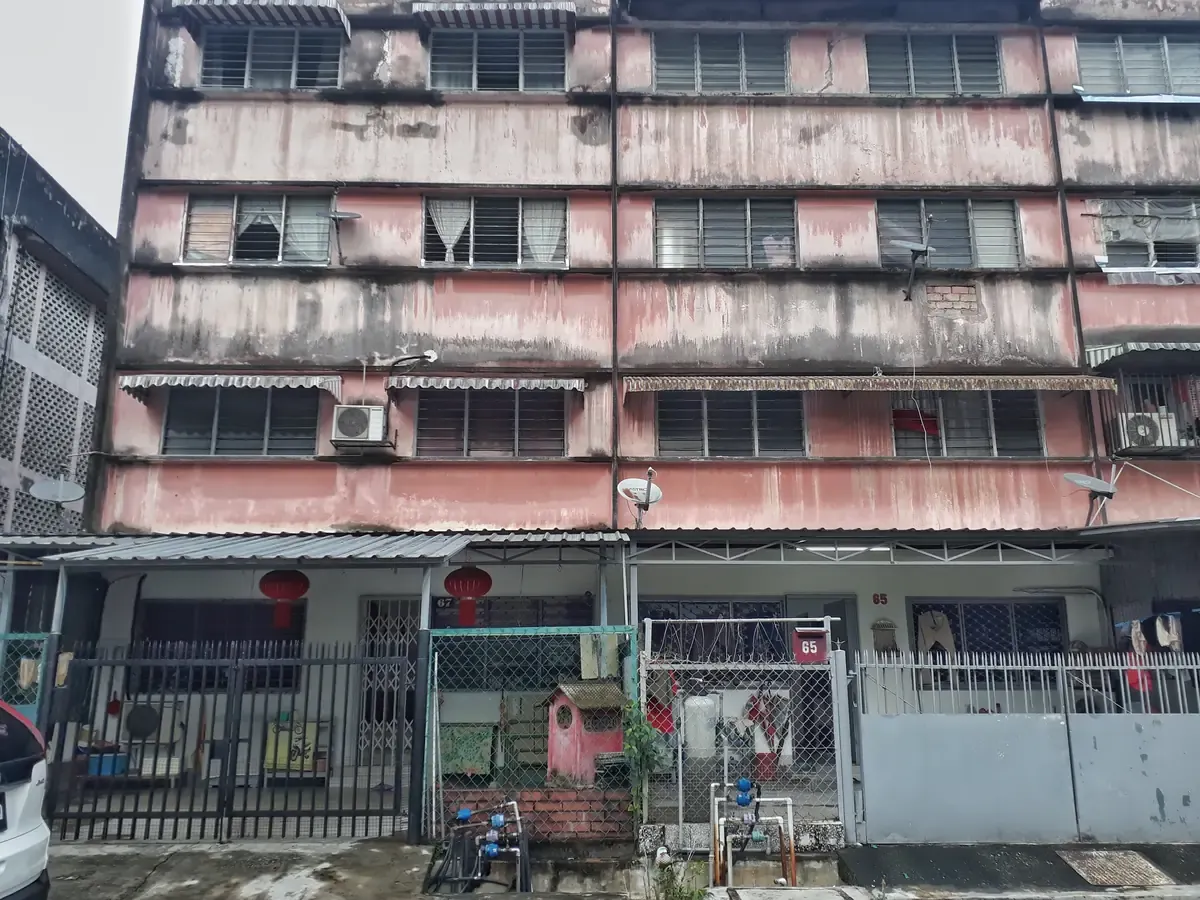
The balconies at Sentul Mansions are a great study in varying levels of permeability. There are two designs here: the first one (Balcony A) is a full concrete one that rises up to the waist, the second type (Balcony B) is one built with thin metal railings.
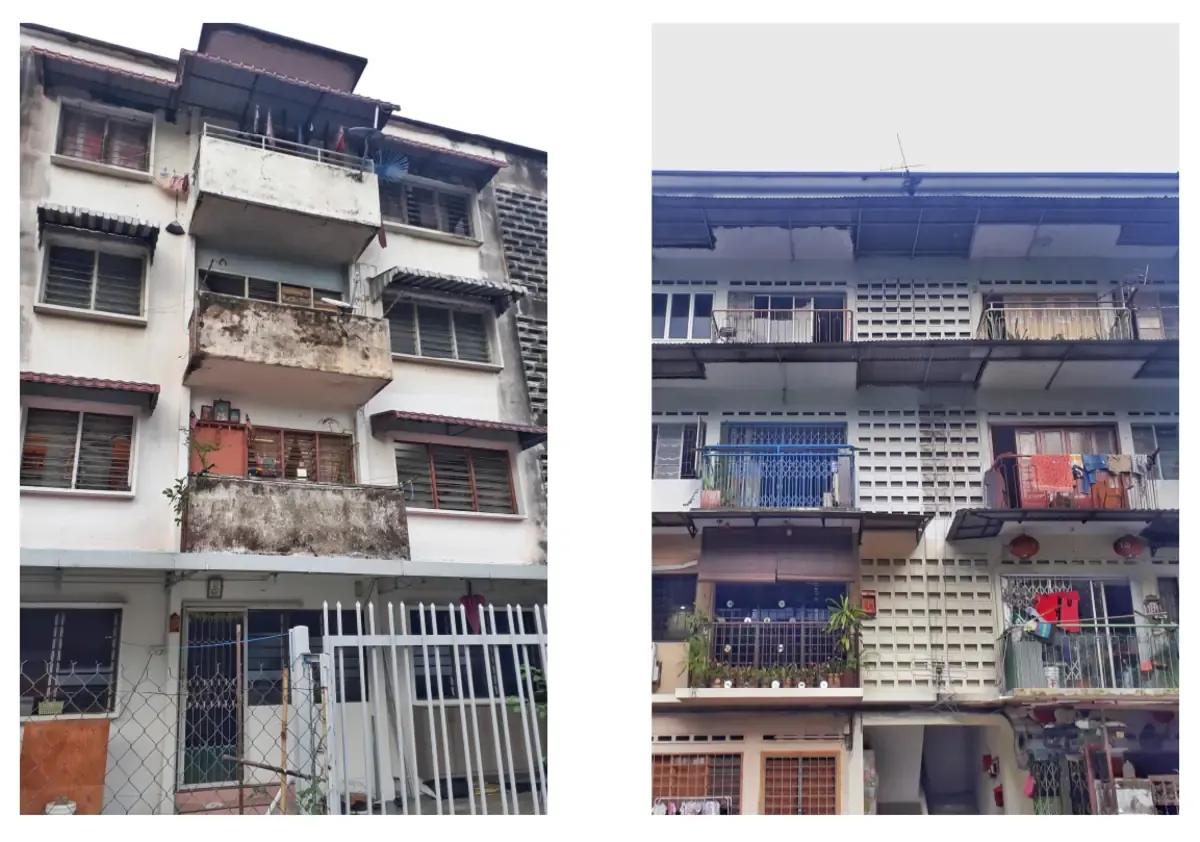
Left to right: Balcony A and Balcony B
Now imagine yourself as someone who lives in a unit with Balcony A. You walk out to your balcony and lean against this concrete half wall. If you want to grab a chair, relax out on your balcony to watch the scene below, you simply can’t. The moment you sit in a chair, your view is obstructed by the waist-high concrete wall. This limits your time spent hanging out on the balcony. Left with no choice but to stand to take in the view, you soon retreat back in when your legs get tired.
Balcony B on the other hand, offers you options. With Balcony B’s design, you can drag a chair out to sit and still have a fairly uninterrupted view through the railings. Since the railings also allow light and air to come right through, it becomes a great place to hang your laundry and to tend to potted plants. And when it gets too overwhelming, you can always head back into your home and even shut the sliding doors if needed. You have choices.
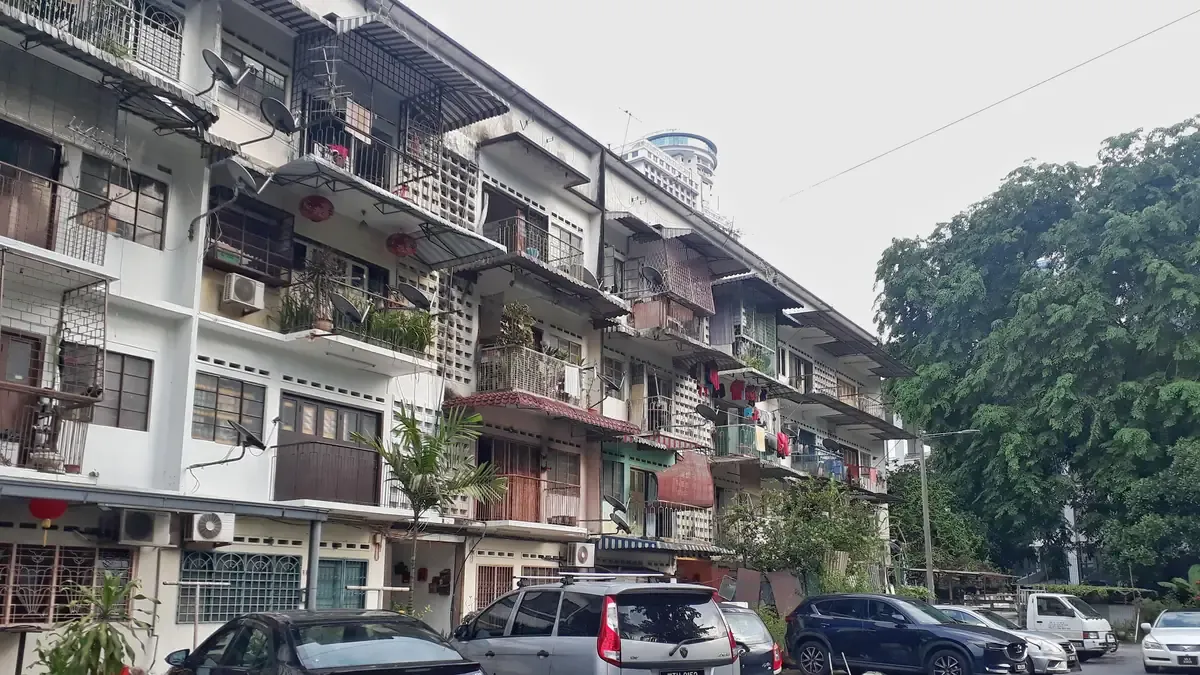
Well-designed permeability allows some, but not too much interaction between the private and public. The passerby walking through can appreciate the liveliness of the residents, admire their homes and their plants. Similarly, residents can look out at passersby and be entertained by the street scenes below.
All of this looking ties closely to the safety of a neighbourhood.
“Eyes on a street” is a term coined by urbanist Jane Jacobs, who wrote about it eloquently in her seminal book The Death and Life of Great American Cities. Based on her observations of street life in her beloved New York City, she noted that “there must be eyes upon the street, eyes belonging to those we might call the natural proprietors of the street” to make neighbourhoods safer.
She stressed that for this kind of watching to be most effective, it had to happen casually, naturally.
“The safety of the street works best, most casually, and with least frequent taint of hostility or suspicion precisely where people are using and most enjoying the streets voluntarily and are least conscious, normally, that they are policing.”
A CCTV records everything but lacks the immediate response that could come from casual “eyes on the street”: aunties hanging their laundry, shopkeepers in their storefront or uncles lounging at the kopitiam.
The effect is visceral: as a passerby entering the neighbourhood, I become instantly self aware as I note the presence of residents and they acknowledge mine. Even when bearing no ill intent, our social behaviours shift from when we are unseen compared to when we are in the eye of the public. This small change can play a significant role in the complex issue of achieving neighbourhood safety.
As evening sets in at Sentul Mansions, lights from inside the houses spill out to the street. Noise and chatter flow out, creating a liveliness that runs like a current through the two blocks, contrasting greatly with that of Hock Lock’s - whose residents are probably engaging in similar evening routines, just blocked in entirely by concrete.
More posts:
5 December 2024
What Skateboarders Can Teach Us About the Future of MRT
Skate plaza at Ampang Park MRT illustrates vibrant placemaking reshaping the future of public transit hubs.
Read More →
4 September 2024
How Community Engagement Breathed New Life into an Underused Sports Facility
Community engagement revives Subang Ria’s abandoned courts, turning them into a vibrant, multi‑use hub.
Read More →
7 July 2024
A Placemaker's Guide to Running Town Halls that Actually Matter
Practical guide to planning, running, and following up on town halls that build trust and drive meaningful placemaking outcomes.
Read More →